

Viper Shark
Updated: Aug 10
The Viper shark (Trigonognathus Kabeyai.) is an extraordinary creature because of its unique appearance, glowing body, and amazing adaptations for surviving in the deep ocean. Its shocking ability to live in one of Earth's harshest environments makes it one of the most fascinating sharks in the sea. By studying animals like the Viper shark, we can learn more about the mysterious and fascinating world hidden in the deep.

Viper shark anatomy and appearance
Rare deepwater shark famous for its positively alien complexion and protractible jaw - the Viper shark or Viper dogfish, Trigonognathus Kabeyai. But what is so special about it?
The existence of this peculiar-looking shark dates back almost 41 million years. That's a long time to be around! This deep-sea dweller navigates the dark, dank conditions in the twilight zone in a very particular way. Thanks to its inherent bioluminescent underbelly, this shark creates its own light that provides it with a better sense of direction and awareness of its surroundings. The Viper shark's distinctive eel-like body is adorned with rows of light-producing organs called Photophores. These specialised organs emit a faint glow to attract prey, or equally to confuse predators. Though if that doesn't put off potential predators, this shark's needle-sharp, fennel-shaped rows of shredding teeth might do the job. The frontal side of these sharks' skin is covered in small flat V-shaped scales that closely resemble teeth. These are called dermal denticles and are specific to sharks and other similar creatures with a cartilage skeleton, such as rays and skates. These dermal denticles make their skin hard and aid in quick getaways when needed. Another astonishing feature on this alien looking fish is its highly extendible jaw, designed for speedy and agile attacks when hunting.

Viper shark habitat
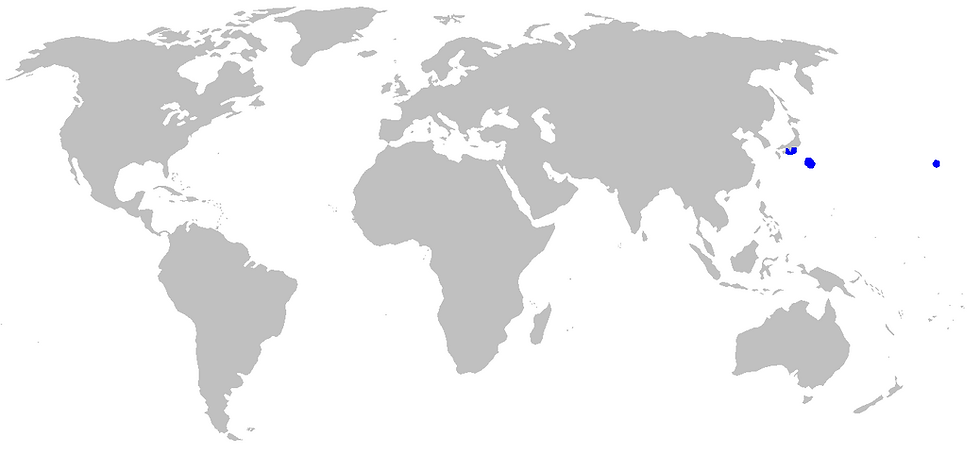
The Viper shark or Viper dogfish is found predominantly in the Pacific Ocean, specifically along the coast of Japan and Taiwan, with several sightings also documented near the Hawaiian Islands. True to their nature, these sharks spend most of their time between 890-1180 feet deep, sitting comfortably in the Mesopelagic zone, or more commonly known as the Twilight Zone. These sharks are also well acquainted with travelling and adapting and can migrate large distances in the span of 24 hours. While the majority of their days are lived out in this zone, Viper sharks are also known to emerge to warmer waters during the colder months of winter, coming up to about 490 feet deep in the Epipelagic zone for a warm night's sleep. Shallower waters are home to these carnivores' main sources of food, another reason for their epipelagic trips.
Viper shark diet
A Viper shark's diet is primarily made up of bony fishes, such as lanternfish, lobsters, and shrimp. Thanks to their signature retractable jaw, these sharks are able to consume prey as large as themselves but are unable to bite. This means they opt for extending their jaws and swallowing prey in one swoop. Natural predators of this species include bigeye tuna and sickle pomfret, as well as a variety of bigger deep-sea fishes. Contrary to the popular belief about sharks, this is yet another example of a shark with no report of any sort of attack or antisocial behaviour towards humans.
Viper shark population. Why are sightings rare?
This elusive shark species only has a handful of sightings and encounters to its name. This is generally because they live at extraordinary depths, so spotting one alive is an extremely rare occurrence. Aside from this, capturing a Viper shark is no easy feat, as the vast majority of specimens to be studied died in the fishing nets. This is because once trawling or fishing nets are hauled back up to the surface, the abrupt change in pressure causes specimens to suffer extreme barotrauma, which proves fatal to most would-be captured sharks. However, against all odds, a small number of lucky trawlers have proved successful in the capture of this rare specimen. The largest caught male viper shark was captured off Japanese coasts, measuring a whopping 47cm, alongside the largest female specimen measuring 54cm long! This unusual shark species was first discovered by Japanese fishermen in 1986 just off the southern coast of Japan, but it was later found that this species had been roaming the Earth's oceans for millions of years before.
Viper Shark Conservation
The IUCN lists the Viper shark as a species of 'Least Concern' to marine biologists and conservationists, partially because the lack of specimens leads to insufficient data about their exact population and well-being.
What makes this shark extraordinary?
This shark belongs to the family of Etmopteridae, which classifies it as a member of the lantern shark family. It is also the sole surviving member of its Genus (group of sharks with similar characteristics). This is because this shark has made extraordinary adaptations over the years that have played a massive role in their survival in the ever-changing environment. For example, the viper shark's ability to withstand and thrive in the immense pressure of the twilight zone is enough to leave scientists gobsmacked. Nevertheless, it all makes sense when this species' hangout place is in and about the continental slopes, where the seabeds are known to drop drastically and suddenly. Another baffling adaptation is this shark's potential to live without any light, and not to mention the below-freezing temperatures of its natural habitat. Alongside being more than well adjusted, these sharks are also unusual. Unlike any other species of Dogfish sharks, the viper dogfish can extend their jaw farther and faster than any other, making them remarkable hunter. Needless to say, the viper sharks' uncanny skill to adjust to extremely harsh environments classifies them as extraordinary.
Writter Bio:
Naiara Budia, 16 — I love travelling, reading, socialising, and making new friends, especially when it means pushing myself out of my comfort zone. The ocean is a magical and fascinating place, that holds a special presence over my life and am deeply passionate about. Sharks, in particular, are such beautiful and powerful presences, and I want to do whatever I can to help protect them and keep the ocean thriving


