

Megamouth Shark
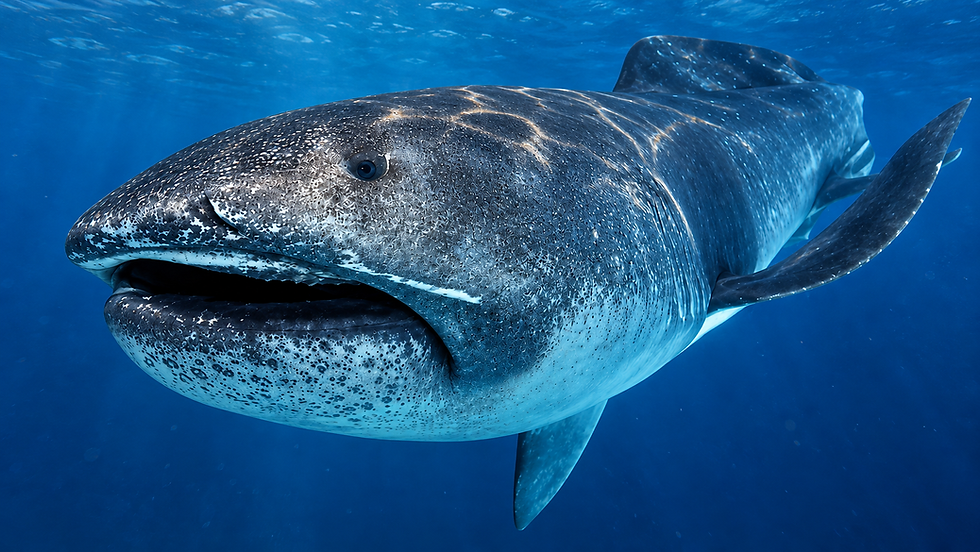
The rare Megamouth shark (Megachasma pelagios) is the smallest (although still large) of the three filter feeding sharks, which also include the Basking shark (Cetorhinus maximus) and Whale shark (Rhincodon typus). They are the only living species in the genus Megachasma, which has two extinct megamouth species. The shark gets its name from its large, circular mouth, which can span 1.3m across on a 5m mature adult.
Megamouth sharks are one of the rarest sharks in the world, so far only 124 individuals have been documented since their discovery in 1976. The highest number were seen in the Philippines and Japan. They were actually discovered by accident after one got tangled in the cables of a US navy research vessel operating off the coast of Oahu, Hawaii.
Megamouth shark anatomy and appearance
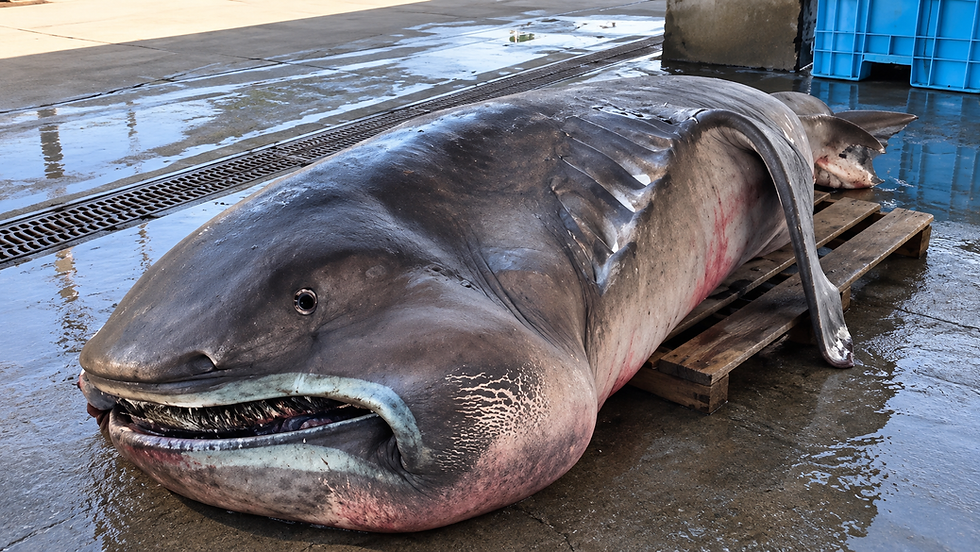
The third biggest shark in the world, they can grow on average up to 5m long, but have been known to grow to over 7m long. Mature males are slightly smaller, measuring on average 4m long. They can weigh an average of a massive 1,200kg. Sporting a large bulbous head, that is bigger than their abdomen and unusually large lips, they are one of the most unique species of shark to roam the ocean. There are 50 rows of tiny teeth in the upper jaw, and 75 rows in the lower jaw, however, only the first 3 rows appear to have any function.
With a stout body, weak muscle structure, tapering body shape from head to tail, and small, floppy fins, the Megamouth has a poor overall body structure, which means it does not have the strongest swimming ability, swimming at an average of 2mph. Megamouths are blueish to brownish black on top and white underneath. They have a silvery white band on their upper jaw that reflects light, attracting prey towards them. Scientists originally thought that their lips produced bioluminescence that attracted prey, but they now believe this is due to the interaction of plankton when they are feeding. The lifespan of the Megamouth is currently unknown.
Megamouth shark habitat
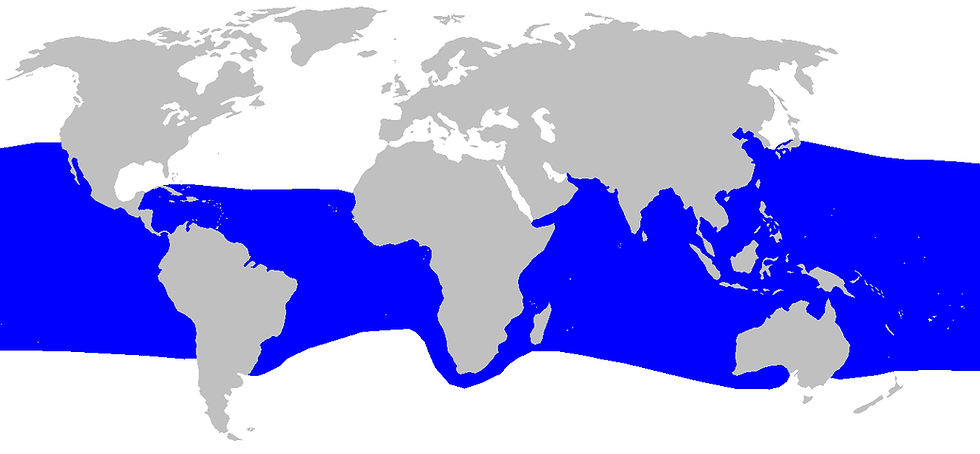
These sharks are believed to prefer tropical to temperate waters and have been recorded in the Atlantic, Indian and Pacific oceans. Megamouths are more frequently sighted in Hawaii, Japan, Philippines, and Taiwan. With upper depth limits of 5m in coastal waters and lower depths of 1,500m in offshore waters, they are diel migrators, meaning they spend the day in deep waters and come up to shallower waters to feed at night. They are believed to follow the deep layer of plankton and other organisms in the ocean that migrate towards the surface at night.
Megamouth shark diet
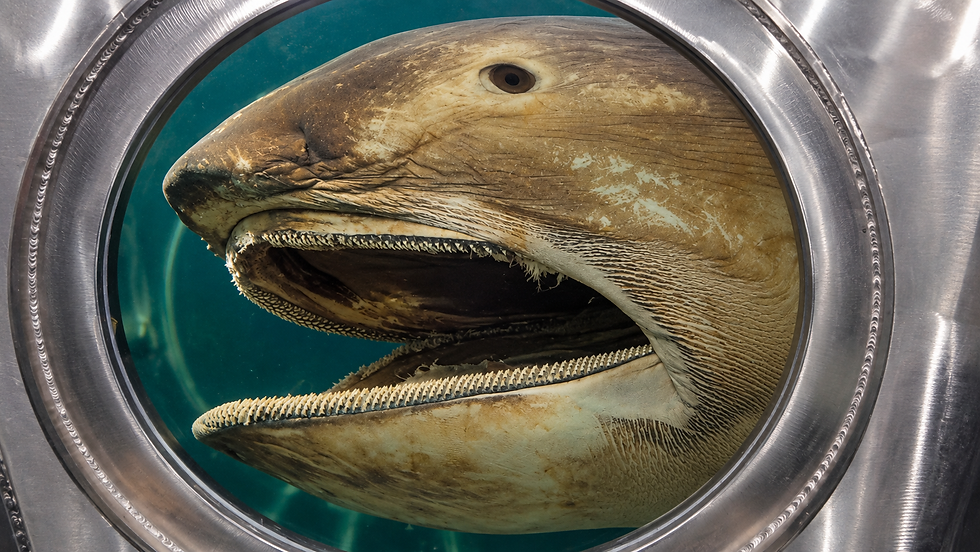
Megamouths are omnivorous, with a diet consisting mainly of plankton, shrimp, krill, and jellyfish. It is a filter feeder, filtering plankton through their gills and allowing sea water to escape back to the ocean. The exact filter feeding method that Megamouths use is still a mystery. They were initially thought to ram feed like Basking sharks; however, their weak jaw muscles would not be able to sustain keeping the mouth open continuously, and they also can’t sustain swimming speeds fast enough to trap plankton and restricted gill openings wouldn’t allow enough water to flow out of its mouth while moving.
Megamouths also don’t have cartilage stiff enough to create a suction force great enough to filter feed like Whale sharks do. They can, however, expand their mouth to an enormous size, even compared to the other filter feeding sharks. While the Basking shark’s mouth is about 17 percent of its entire body length, the Megamouth’s is roughly 28 percent of its body length. From this it has been suggested that they perform engulfment feeding, similar to humpback whales.
Megamouth shark population
Female Megamouths give birth to a small number of live pups. Scientists believe the method of reproduction is ovoviviparous, meaning eggs are fertilised inside the body and later hatched, where the pups continue to develop inside the womb. As the pups aren’t attached via umbilical cord, a process called oophagy takes place, a kind of uterine cannibalism, where the pups eat unfertilised eggs and smaller pups, meaning numbers of births per litter are small. Scientists assume that this species mate year-round.
The smallest known Megamouth recorded was 1.77m, but it is unknown whether this is size at birth.
There is a lack of genetic diversity between all captured Megamouth sharks, which could indicate that the entire species is a single highly migratory interbreeding population.
Sperm whales (Physeter macrocephalus) and Cookiecutter sharks (Isistius brasiliensis) are believed to be natural predators of Megamouth sharks, but they should not cause any population decline. Global population and population trend is not currently known.
Megamouth shark Conservation
Megamouth Shark has most recently been assessed as 'Least Concerned' for The IUCN Red List of Threatened Species in 2018. However, this could be inaccurate due to how little is known about the Megamouth, as they are rarely seen or studied.
There has been limited interaction between this shark and fisheries in the past, however, as technologies improve and humans are pushing deeper, there have been increased instances of bycatch of the Megamouth shark, particularly in Southeast Asia. Even when Megamouths are released after being caught they will likely die due to stress related health issues, as with a recent occasion where a Megamouth was accidentally caught and released off the coast of Japan but was later found dead on the seabed. If the species was to be subjected to increased fisheries action, it would be threatened with an elevated risk of extinction due to its anatomy, distribution and low reproduction rates.
There are no conservation strategies in place for this species. The United States Pacific Fisheries banned the retention of Megamouth catches in 2004, however this was amended in 2015 to allow accidentally caught specimens to be sold or donated for scientific, educational, research or display purposes. It is mandatory to report Megamouth shark catches to the government in Taiwan.
Megamouth shark and humans
This mysterious species poses no threat to humans. The most recent sighting where video footage was captured was off the coast of Indonesia’s Komodo Island, when a Megamouth swam past a diver.


